The future of assessment is human-centered
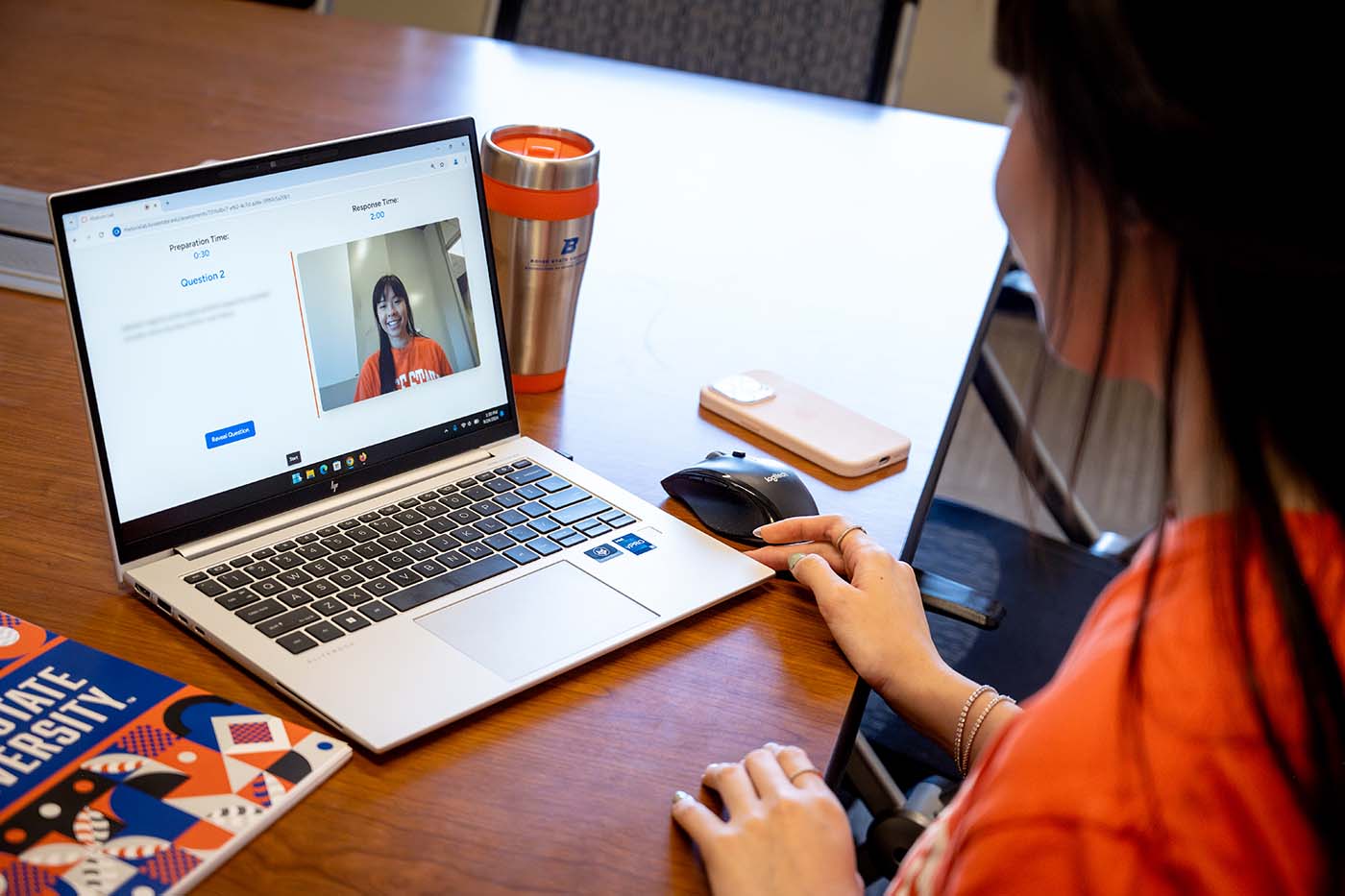
Rhetorix transforms short written tasks into Asynchronous Oral Assessments. Students think on their feet; instructors see real understanding. Technology supports teaching—it doesn’t replace it.
“This feels like real learning. The concepts stayed with me far longer than anything I’ve written on a test.”
Why it matters
What students submit is no longer proof of what they know.
Today, AI makes it easy to submit an assignment without learning a thing. What instructors need isn’t more plagiarism detection. They need a way to restore credibility, confirm real understanding, and strengthen student skills.
- 88% of instructors are concerned about AI in student work
- 55% expect cheating to get worse
- 67% worry students aren’t really learning
- Detection tools alone aren’t enough
Polished ≠ Proficiency
Written work can be outsourced to AI.
Trust Erosion
Harder to know who did the work.
Time Pressure
Grading volume keeps rising.
Engagement
Students need to show real thinking.
Proven in the Classroom
Built with faculty, validated with students.
- Built with faculty, for faculty: developed and refined in real courses.
- Scientifically validated: research-backed approach, not just technology.
- Recognized and funded: NSF support and patent-pending technology.
“The asynchronous oral exams were especially valuable for my learning, as they closely mirrored the real-world expectations I will face in the workforce, where demonstrating knowledge through speech, rather than traditional exams, is often required.”
Benefits for Instructors
Authentic assessment without extra grading time.
Save Time
3-minute responses + structured rubrics capture real understanding quickly.
Fair & Trusted
Reduce bias and support your professional judgment.
Engaged Students
Spontaneous, oral delivery keeps students accountable and involved.
Solution
Preparation‑first assessment. AI‑irrelevant by design.
Students prepare more because questions are spontaneous and responses are time‑restricted. That real‑world pressure surfaces internalized knowledge,not polished text or rote memorization. Our smart grading dashboard lets faculty grade faster and with more insights than comparable written work.
- Spontaneous prompts: students can’t script answers.
- Time‑restricted delivery: 3 minutes ≈ 1 page.
- Smart grading: transcripts, communication metrics, rubrics.
- Adaptable: swap short written tasks for oral responses (with optional custom questions from prior work).
Prepared, not prompted.
Real‑world pressure reveals what’s learned and speeds grading.
- • Keep students on their feet with spontaneous questions
- • 3‑minute response limit
- • Dashboard: transcripts, metrics, rubrics
- • Custom prompts from prior work
- e.g., "In your recent essay, you said X, please justify this position."
Features
Simple, fair, and scalable.
Spontaneous questions
Students know the topic, not the exact prompts so they must be prepared and think on their feet.
3 minutes ≈ 1 page
Keeps assessments efficient, fair, and aligned to short written tasks.
Targets short assignments
Convert any 1-page (or shorter) paper, reflection, or prompt into an oral response.
Supports instructors
Technology provides structure and evidence—faculty judgment stays in charge.
See it in action
Watch how Rhetorix works in the classroom
- • Spontaneous prompts → authentic responses
- • 3-minute limit ≈ 1 page of text
- • Support faculty judgment. Don't replace it
Research & Articles
Science-led, evidence-based.
Explore the peer-reviewed work and articles informing Rhetorix. We build with research, not hype.
The Root of Rhetorix Lab
Discover the founders' research-based motivation for Rhetorix Lab.
Cover Story • NeuroIS Magazine
Why Structure Matters
Valid and fair oral assessments require consistency and objectivity.
Issues in Educational Research
Benefits of Oral Exams
Learn why oral exams should be a more prominent part of education.
Journal of Geography in Higher Education
Sign up / Request a Demo
Submit the form and we’ll reach out with next steps.